July 07, 2026
When cybersecurity leader CrowdStrike confirmed in November 2025 that a "suspicious insider" had leaked internal dashboards containing sensitive company resources and access credentials, it exposed a gap in insider threat detection that billions in annual security spending had failed to close. The employee — who accepted a $25,000 payment from Scattered Lapsus$ Hunters, a cybercrime supergroup combining elements of Scattered Spider, LAPSUS$, and ShinyHunters — shared photographs of his computer screen externally, including an Okta single sign-on panel granting access to critical internal applications.
The breach raised an uncomfortable question for security leaders worldwide: if one of the industry's most security-conscious organizations could fall victim, what does it mean for my organization?
The answer reveals a structural problem. Organizations have invested heavily in keeping attackers out — through role-based access control (RBAC), zero-trust architecture (ZTA), data loss prevention (DLP), and endpoint protection. But once an authorized user views data on screen, those tools become passive observers. Screenshots, phone photographs, and shared dashboard images can exfiltrate months of sensitive analysis in seconds, often outside the reach of conventional insider threat detection.
This analysis examines why conventional tools can't close this gap, which threat vectors they miss, how Digimarc's Leak Detection solution addresses the post-access blind spot, and what a complete insider threat detection program looks like in practice.
The CrowdStrike leak surfaced publicly on November 21, 2025. The hackers initially claimed the screenshots proved a broader network breach, but CrowdStrike's investigation found no evidence of a system compromise. The breach came entirely from within, through a single employee with legitimate access.
The incident surfaces questions every security leader should ask about their own organization:
The structural answer: traditional insider threat detection systems are designed to prevent unauthorized access. Once access is authorized and data displays on screen, those systems largely assume the risk is controlled. The gap between authorization and exfiltration is exactly where the CrowdStrike breach occurred — and where most security programs have no visibility.
McKinsey's Technology Trends Outlook 2024 identified digital trust and cybersecurity as one of the fastest-growing investment categories, with a 57% increase in investment in 2024 alone. Yet despite this surge, the Ponemon Institute's 2025 Cost of Insider Risks Report found that the average annual cost of insider risk reached $17.4 million per organization — up from $16.2 million in 2023. Spending is accelerating, but so are the costs. The reason is structural: most investment is aimed at the wrong threat model.
Each major insider threat detection technology shares the same fundamental limitation once an authorized user is inside:
Ponemon's 2025 report found malicious insiders account for 25% of insider incidents at an average cost of $3.7 million per incident. Organizations now spend 16.5% of their annual IT security budget on insider risk management — double the 8.2% reported in 2023. Yet the vast majority of that investment still targets perimeter and access controls, not post-access visibility. The result is a persistent blind spot where insider threat actors operate with minimal detection risk.
"Even the best security can't stop a phone camera." — Digimarc Leak Detection
The CrowdStrike incident exemplifies a broader shift in how insider threats operate. Three post-access vectors define the emerging frontier — and conventional controls struggle to address them.
1. Dashboard and Portal Leaks
Modern executive dashboards and employee portals are designed to aggregate sensitive information into easily consumable screen views — which simultaneously makes them high-value targets. A single screenshot of an executive dashboard can capture months of financial projections, operational metrics, or access credentials. The CrowdStrike breach specifically involved dashboard screenshots, illustrating how these information aggregation points become prime targets. Effective insider threat detection must treat dashboards as high-risk endpoints, not just productivity tools.
2. Multi-Platform Distribution After Capture
Once an insider captures sensitive content — via screenshot, photograph, or screen recording — it immediately enters distribution channels beyond corporate monitoring: Telegram groups, encrypted messaging apps, dark web forums, and cloud storage. The CrowdStrike content appeared on Telegram within hours. At that point, every tool monitoring corporate networks and devices becomes irrelevant. The more effective response is to embed accountability into the content before it ever leaves the screen — so that even when it surfaces externally, it can be traced back to its source.
3. Third-Party and Contractor Access
Insider risk expands significantly when contractors, partners, and vendors have access to sensitive systems through portals and content management platforms. These users operate entirely outside corporate device management and behavioral monitoring. Organizations often apply rigorous access controls to employees while leaving equivalent contractor access effectively unmonitored. Post-access insider threat detection must extend uniformly across the full business ecosystem.
Addressing the post-access gap requires a fundamentally different approach: security that persists after data access is authorized and follows content through screenshots, photographs, platform sharing, and AI transformation. This is what Digimarc's Leak Detection solution is built to deliver.
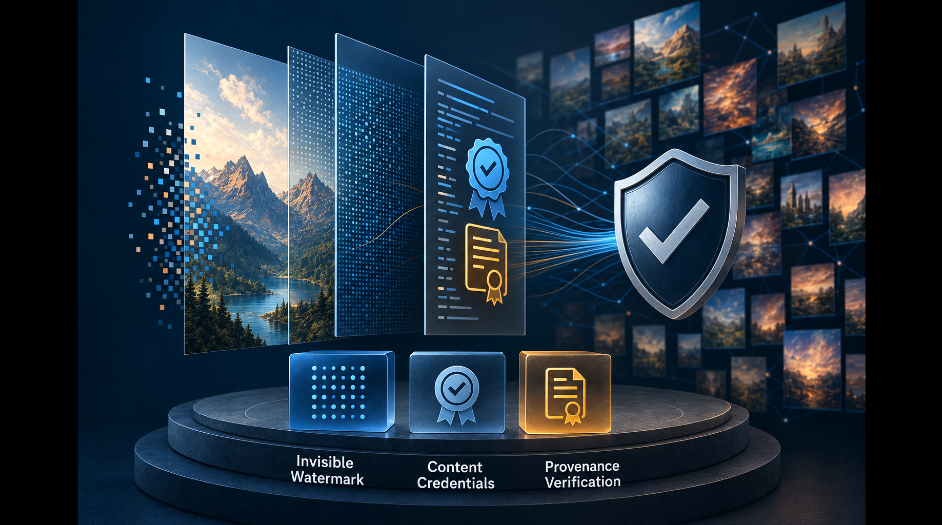
Digimarc Leak Detection embeds persistent, user-attributable identifiers directly into on-screen content. When leaked images surface externally — on Telegram, social media, or news publications — Digimarc enables rapid, precise identification of the breach source.
Digimarc Leak Detection offers flexible configuration based on how your sensitive content is accessed:
Both modes provide the same core capability: persistent, imperceptible traceability that survives screenshots, AI image enhancement, file transformation, and multi-platform sharing — the exact methods used in the CrowdStrike leak.
Proven in the Field
Digimarc's Leak Detection solution has already helped a global technology company trace the source of insider-leaked screenshots of sensitive information — identifying the breach source with precision and without disrupting normal user experience. Organizations across government, media, pharmaceutical, retail, and consumer packaged goods are using Digimarc to close this gap.
"We partnered with Digimarc to address insider threats through their groundbreaking digital watermarking approach, demonstrating creativity and technical excellence. The team engaged deeply to understand our security challenges, co-developing a strategic and effective solution tailored to our business needs." — Sr. Manager, Product & Technology, Global Telecom Company
Digimarc Leak Detection works most effectively as part of a layered security program. Traditional controls remain valuable for reducing the overall insider threat surface; post-access protection addresses the gap where exploitation actually occurs. Ponemon's 2025 report found that 65% of organizations with insider risk programs say it was the only strategy that enabled them to pre-empt a breach by detecting risk early.
A mature post-access insider threat detection program combines:
Ponemon's data shows that organizations containing insider incidents within 31 days spend an average of $10.6 million — compared to $18.7 million for incidents that take 91 or more days to contain. Post-access traceability directly compresses that timeline by eliminating the investigative delay between "leak detected" and "source identified."
What is post-access insider threat protection?
Post-access insider threat protection refers to security controls that operate after an authorized user has already been granted access to systems and data. Traditional tools like RBAC, ZTA, and DLP focus on controlling who gets access. Post-access protection addresses what happens once legitimate access is granted — specifically, preventing and detecting the unauthorized capture and sharing of on-screen content through screenshots, photographs, and screen recordings.
What is the difference between DLP and post-access protection?
Data Loss Prevention (DLP) monitors file transfers and network traffic to detect unauthorized data movement through digital channels. It cannot detect a user taking a photograph of a screen with a personal smartphone or using a personal device to take a screenshot of corporate content. Post-access protection (such as imperceptible digital watermarking) addresses this analog gap by embedding traceable identifiers directly into displayed content so that even phone photographs carry embedded evidence of their source.
How does imperceptible watermarking support insider threat detection?
Imperceptible digital watermarking embeds imperceptible, user-attributable identifiers into on-screen content at the moment it is displayed. These identifiers can survive screenshots, photographs, AI image enhancement, file transformation, and multi-platform sharing. When leaked content surfaces externally — on Telegram, social media, or in the news — the watermark can enable immediate identification of the breach source. Solutions like Digimarc Leak Detection apply this capability at scale across intranets, portals, and content management systems.
How much do insider threats cost organizations?
According to the Ponemon Institute's 2025 Cost of Insider Risks Report, the average annual cost of insider risk has reached $17.4 million per organization. Malicious insider incidents specifically cost an average of $3.7 million each. Organizations that contain insider incidents within 31 days spend an average of $10.6 million — compared to $18.7 million for those taking 91 or more days. Early detection and rapid source identification are the primary levers for reducing these costs.
Which industries need post-access insider threat protection most?
Any industry handling sensitive proprietary information, regulated data, or high-value intellectual property faces significant post-access insider risk. Organizations in government, media, pharmaceutical, retail, consumer packaged goods, financial services, and cybersecurity can adopt Digimarc Leak Detection to close this gap — particularly where employees, contractors, and partners access sensitive dashboards and portals outside of traditional endpoint monitoring.
The Path Forward: Insider Threat Detection That Follows the Data
The CrowdStrike incident crystallizes what security leaders have been signaling for years: one of the most significant insider threat detection vulnerabilities today isn't the perimeter — it's the lack of visibility into post-access behavior. Once trusted employees, contractors, and partners have legitimate access to systems and data is displayed on screens, most conventional security controls become passive observers. Forensic markers should be embedded into the content itself so that when leaks occur, organizations can trace them precisely and act immediately.
Digimarc Leak Detection makes this possible — delivering persistent, content-level traceability for what's viewed on screens. Whether protecting media assets, web content, or both, Digimarc is designed to address the post-access gap better than any other tool in your stack.
Ready to close the post-access gap?
Request a Demo | Explore Digimarc Leak Detection | Read: 7 Real-World Insider Leak Stories
Protect Your Business from Damaging Leaks of Sensitive Information:
Sources
TechCrunch: CrowdStrike fires 'suspicious insider' who passed information to hackers
SecurityWeek: CrowdStrike Insider Helped Hackers Falsely Claim System Breach
Ponemon Institute 2025 Cost of Insider Risks Report (via DTEX Systems)
McKinsey Technology Trends Outlook 2024
Picus Security: Scattered LAPSUS$ Hunters — 2025's Most Dangerous Cybercrime Supergroup
Digimarc Leak Detection Solution
Digimarc Case Study: Tracing and Preventing Insider-Leaked Screenshots of Sensitive Information
Share this Blog