Companies have built formidable digital fortifications around sensitive data: encryption, multi-factor authentication, role-based access controls, and increasingly sophisticated data loss prevention (DLP) tools. Yet despite this high-tech arsenal, a low-tech insider threat continues to devastate organizations across every industry: screen capture-based data exfiltration through what security professionals call the analog hole.
The vulnerability is simple to describe but hard to close: once an authorized user can see information rendered as pixels on a screen, most downstream security controls become irrelevant. A photograph or screenshot can bypass encryption, DLP, and access controls entirely—no digital trace created. This isn’t a theoretical risk. It has already cost financial services firms, cybersecurity vendors, consumer electronics makers, and technology companies hundreds of millions of dollars in losses.
This guide examines the insider threat landscape the analog hole creates, the emerging technologies amplifying it, and practical strategies for detecting, preventing, and responding to screen capture-based data leaks.
The analog hole is the moment when encrypted, access-controlled digital information renders as visible pixels on a screen. In that instant, data shifts from protected digital form to unprotected analog form—vulnerable to nothing more sophisticated than a smartphone camera.
Malicious insiders exploit this gap by:
This vulnerability is particularly dangerous because it applies to everyone with legitimate access: employees, contractors, and ecosystem partners alike. A smartphone and screen access are all that’s required, regardless of how sophisticated your encryption or access controls are.
Effective detection and prevention starts with understanding what drives people to leak information in the first place. Common motivations include:
Many organizations assume this only happens to companies with weaker security. In reality, even firms with world-class security infrastructure remain vulnerable to screen capture-based exploitation.
The following incidents from 2025 and 2026 illustrate just how persistent—and costly—this risk has become:
1. CrowdStrike: A $25,000 Bribe for Dashboard Screenshots
One of the cybersecurity industry's most respected firms learned this the hard way when an employee was offered a $25,000 bribe by the Scattered Lapsus$ Hunters hacking collective. The employee shared screenshots of internal dashboards—including an Okta portal used to access company applications—directly with the group. Despite CrowdStrike's elite security infrastructure, the leak succeeded through little more than a screen capture that bypassed CrowdStrike’s conventional digital exfiltration controls.
The incident demonstrates that even the most security-forward organizations remain exposed the moment an employee can photograph or screenshot what’s on their screen.
Source: TechCrunch
2. TD Bank: An Employee Photographed 255 Customer Checks
An employee in TD Bank's anti-money laundering department used her personal smartphone to photograph 255 customer checks displayed on her work screen, then distributed the images on a Telegram channel, instructing buyers on how to deposit them. Prosecutors linked the leak to a wider check-fraud scheme totaling nearly $500,000, and the bank terminated the employee once the breach came to light.
The case shows how sensitive financial data displayed on-screen becomes an easy target—and how the low-tech nature of screen photography makes it extraordinarily hard to detect or prevent.
Source: Manhattan District Attorney’s Office
3. HP: Unreleased 2026 Product Lineup Surfaces Before CES Launch
In late December 2025 and early January 2026, detailed images and specifications of HP's unreleased CES 2026 lineup—including EliteBook X, OmniBook, and OMEN gaming laptops—surfaced online days ahead of HP's official announcement. Unlike the other cases here, HP has not disclosed how the material got out, and public reporting doesn't confirm whether an employee, a manufacturing partner, or another point in the supply chain was the source. It's included as a reminder that pre-release product information moves through many of the same aggregation points—portals, shared drives, vendor systems—this article describes, whether or not screen capture specifically turns out to be the method.
Source: Windows Latest
4. Coinbase: Up to $400 Million in Estimated Costs from Bribed Support Agents
Cybercriminals recruited and bribed Coinbase support agents—including contractors at an overseas third-party vendor—to leak customers' sensitive personal information. The breach compromised roughly 70,000 customers, and Coinbase estimated remediation costs of up to $400 million.
The case shows how this risk extends well beyond direct employees to contractors and third-party partners with access to sensitive customer data. Outsourcing to third-party providers, in particular, extends the attack surface into territory that's difficult to monitor or control directly.
Source: Coinbase
5. Google: Engineers Indicted for Allegedly Photographing Screens to Evade Detection
In February 2026, federal prosecutors indicted two former Google engineers and one of their spouses on charges including conspiracy to commit trade secret theft, after Google's internal security systems flagged one defendant's digital file transfers and cut off her access. According to the indictment, she then allegedly shifted to manually photographing hundreds of computer screens containing confidential material—specifically, prosecutors allege, to avoid leaving the kind of digital trail that had gotten her caught the first time.
The night before traveling to Iran in December 2023, she allegedly took roughly two dozen photos of her husband's work screen to capture trade secrets belonging to a separate mobile chipmaker where he was employed. The case is ongoing.
This incident is the clearest illustration yet of the analog hole in action: when digital monitoring closed one exfiltration channel, the alleged scheme simply moved to a channel DLP tools might not see.
Source: CNBC
Several converging trends are widening the analog hole, making it faster and easier for malicious insiders to aggregate valuable information onto a single, capturable screen.
1. Employee Portals Aggregate Sensitive Data Into One View
Modern organizations increasingly deploy employee portals and digital workspaces that centralize access to business data, applications, and processes. These platforms boost productivity, but they also concentrate sensitive information into condensed, easily photographed screen views.
Where accessing comprehensive business information once required navigating multiple systems and databases—activities that might trigger alerts—modern portals let a single user view aggregated, sensitive insights on one screen. Consolidated views like these are simply easier to photograph.
2. AI Copilots Enable Non-Technical Employees Query Sensitive Data
Retrieval-Augmented Generation (RAG) systems and generative AI assistants are democratizing access to vast internal knowledge bases, letting even non-technical employees query sensitive systems in plain language. The synthesized answers appear in screen-ready formats that are simple to capture and share.
The technical barrier to accessing valuable information has effectively disappeared. Any employee with legitimate access to an AI copilot can ask, “Show me our top 50 customers by revenue with their contract details,” and receive screen-ready, aggregated information ready to be photographed.
3. SaaS Outsourcing Extends the Risk to Third Parties
As organizations outsource operations—loan processing, customer support, data analysis, and more—to third-party SaaS providers, exposure grows exponentially. Third-party employees accessing sensitive client data through their own employer's systems are exactly the kind of vector most organizations struggle to monitor.
The Coinbase incident shows how outsourced providers can become critical weak points, especially when they operate without the same security governance and oversight applied to direct employees.
4. Remote Work Removes Physical Oversight
Remote work has transformed this risk by removing physical oversight entirely. Employees working from home access sensitive systems with a personal smartphone within arm's reach—and no colleague nearby to notice a quick photo.
Without observation, screen photography becomes essentially undetectable. Remote work has quietly removed one of the strongest deterrents this risk ever had.
5. Ubiquitous Phones Make Capture Frictionless
Employees today often carry two phones: one for work, one personal. That ubiquity makes it remarkably easy to photograph a screen surreptitiously, whether at home or in a busy office. The device is always within reach, always has a capable camera, and leaves no trace on any corporate monitoring system.
Put simply: accessible phones plus accessible information has made screen capture one of the most frictionless attack methods available today.
Organizations across every industry have invested heavily in security infrastructure: Privileged Access Management (PAM), Zero Trust models, Data Loss Prevention (DLP) systems, Digital Rights Management, and AI-driven monitoring. These tools address many risks effectively, but they share one critical blind spot—most can’t even see, let alone stop, screen capture of data that's already been legitimately accessed and rendered on-screen.
Here's why each of these tools falls short against screen capture specifically:
This gap exists because traditional controls focus on preventing unauthorized digital access and transfer. Once access is granted and data appears on-screen, these tools assume the risk is handled. The analog hole—the moment data becomes visible pixels—is exactly where that assumption breaks down.
Effective defense requires addressing both traditional attack vectors and the analog hole specifically. A comprehensive program combines several layers of control:
1. Implement Post-Access Screen Capture Detection and Watermarking
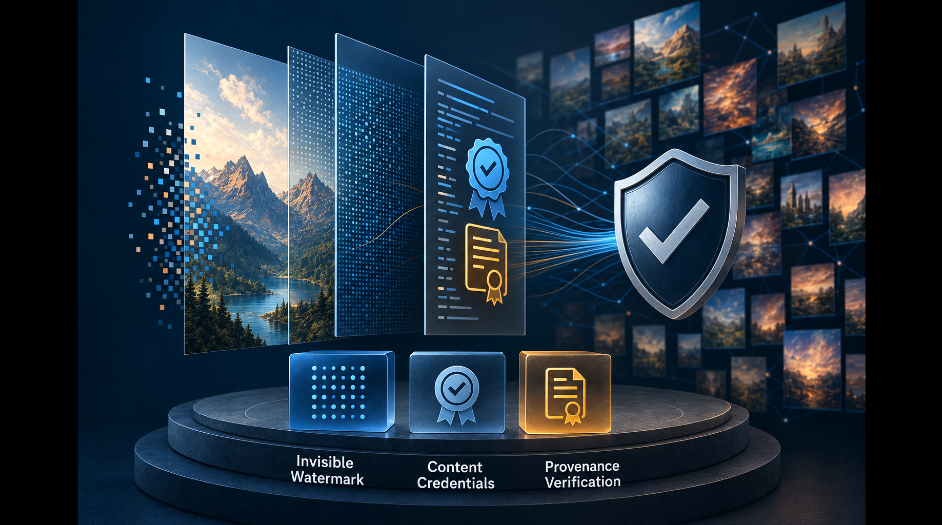
The most critical gap is post-access protection: what happens after data is legitimately accessed and displayed on-screen. Closing it requires solutions that detect screen capture attempts and embed impercetible imperceptible, user-, session-, or other source-attributable identifiers into on-screen content through digital watermarking.
This approach embeds covert, user-specific watermarks directly into screens, so if a screenshot or photograph leaks externally, security teams can trace it back to the specific user responsible—often within minutes. The watermarks are designed to survive image enhancement and remain detectable even in low-quality photographs.
Key benefits include:
2. Deploy Behavioral Analytics for Early Warning
Behavioral analytics monitor user activity for anomalies that may indicate risk, such as:
Combined with screen capture detection, behavioral analytics can flag risky activity before exfiltration occurs—turning response from reactive to proactive.
3. Layer DLP, Zero Trust, and Data Classification
Traditional controls often can't stop screen capture on their own, but they remain essential for reducing overall exposure. For example:
These tools work best when focused on the highest-risk areas—employee portals, executive dashboards, product planning systems, and customer databases—where sensitive information tends to aggregate
4. Extend Governance to Third-Party Partners and Contractors
An expanding ecosystem of partners, contractors, and third-party providers requires its own dedicated governance. As a best practice, organizations should:
The Coinbase incident is a reminder of what third-party governance failures can cost: hundreds of millions of dollars, in that case.
5. Build Insider Threat Awareness and Security Culture
Technology alone isn’t enough. Organizations also need a security culture where employees understand the risks and consequences of leaking information, built by:
When employees know screen capture may be traced back to them through watermarking, deterrence itself becomes a powerful control. Paired with education about legal and career consequences, security awareness can measurably reduce intentional leaks.
Organizations that implement comprehensive strategies like these report measurable improvements in detection and response times. Enterprise deployments of screen capture watermarking show how the analog hole can be addressed at scale, across distributed workforces and partner ecosystems alike.
For example, a global enterprise deployed Digimarc’s covert digital security layer across tens of thousands of employee portals and digital workspaces worldwide. The results included:
This deployment shows that comprehensive solutions can scale globally, giving IT teams a practical way to close the one gap traditional security infrastructure was never built to address.
As organizations continue embracing digital-first operations, remote work, AI-powered systems, and extended partner ecosystems, this risk will only intensify. The analog hole—the vulnerability created the moment sensitive data displays on a screen—remains one that traditional security controls can't fully close on their own.
Forward-thinking organizations are already implementing strategies that:
Screen capture-based leaks are a fundamental vulnerability in modern security architecture. No organization—regardless of how sophisticated its firewalls, encryption, or access controls—can rely on those measures alone to prevent an authorized user from photographing what’s on their screen. Only post-access protection addresses that gap.
The analog hole reflects an uncomfortable truth: no security infrastructure is absolute once humans have legitimate access to sensitive information on a screen. Employees, contractors, and partners with phones are at risk by default—it's not a matter of if this vulnerability gets exploited, but when.
The good news is that it can be managed, using proactive, multi-layered technologies that combine physical oversight, behavioral monitoring, and traceable identifiers tied to specific users, timestamps, and devices—closing the gap traditional security controls can't reach.
Organizations must take swift action to:
Organizations that combine traditional controls with post-access protection can reduce their exposure, respond faster when incidents occur, and deter future attacks through visible accountability.
Ready to close the analog hole and protect your organization from insider threats?
Discover how Digimarc's Leak Detection solution delivers seamless, enterprise-scale protection against screen capture-based data leaks. Our impercetible watermarking technology traces leaked screenshots and photos back to their source, enabling swift investigation and prevention. Organizations across financial services, cybersecurity, consumer electronics, and technology already rely on it at scale. Request a demo today to see it in action.
What is the analog hole in cybersecurity?
The analog hole is the point where digital security controls stop working: the moment access-controlled data renders as visible pixels on a screen. Once information is visible, it can be photographed or screenshotted and bypass encryption, DLP, and access controls entirely.
Can DLP or endpoint protection stop someone from photographing a screen?
No. DLP and endpoint protection monitor file transfers, network traffic, and managed devices, but neither can see a photo taken with a personal smartphone. That capture happens entirely outside their visibility.
How can a company trace a leaked screenshot back to its source?
Digital watermarking can be used to embed impercetible, user-, session-, or other source-specific identifiers directly into on-screen content. If a screenshot or photo leaks, the watermark survives compression and re-editing, letting security teams trace it back to its source.
Is screen capture data theft common, or mostly theoretical?
It's active and costly. Confirmed cases at CrowdStrike, TD Bank, and Coinbase—among others—show insiders using nothing more than a smartphone camera to bypass sophisticated security infrastructure, with losses ranging from hundreds of thousands to hundreds of millions of dollars.
Does remote work make insider threats worse?
Yes. Working from home removes the physical oversight of colleagues who might otherwise notice someone photographing a screen, making capture both easier and harder to detect.
Share this Blog