Your firewall can't stop an employee with a camera phone. That uncomfortable truth is why insider risk has become one of the most urgent priorities in enterprise security — and why the most damaging incidents of the past two years didn't involve sophisticated malware at all. They involved trusted people, authorized access, and a screenshot.
This guide explains what insider risk is, the forms it takes, the damage it causes, and — most importantly — how to find out whether your organization is exposed. If you'd rather skip straight to the answer, take our free 5-minute insider risk assessment and get a personalized risk profile.
Insider risk is the potential for people with legitimate access to your systems and data — employees, contractors, and partners — to expose, leak, or misuse that information, whether maliciously or by accident.
That definition matters because it's broader than “a rogue employee.” The insider isn't always on your payroll. In today's extended enterprise, your data is viewed every day by outsourced support teams, suppliers, manufacturers, and service providers. Each authorized user is a potential source of exposure, and traditional perimeter defenses were never designed to account for them.
It's also distinct from external hacking. A hacker has to break in. An insider is already inside. Consequently, the system-level security controls most organizations rely on — firewalls, access management, endpoint security — do very little once a trusted person has legitimately opened a document or dashboard on their screen.
The two terms are often used interchangeably, but security teams draw a useful distinction. An insider threat is a person or event: the contractor selling screenshots, the employee emailing files to a personal account. Insider risk is the broader exposure — the probability and potential impact of those events across your entire population of authorized users.
In other words, every organization carries internal data risk, even if it has never experienced an incident. A mature insider risk program measures that exposure before an incident forces the issue.
Insider threats in cyber security generally fall into three categories. Understanding which ones apply to your organization is the first step toward measuring your exposure.
1. Malicious insiders
These are people who deliberately misuse their access — motivated by money, grievance, or notoriety. Increasingly, they don't act alone. Cybercriminal groups now actively recruit and bribe insiders at target companies and their vendors.
The Coinbase/TaskUs breach is the defining example. Support agents at a third-party provider were bribed to photograph workstation screens showing customer data, selling images for $200 each. One agent reportedly captured up to 200 records per day. The breach ultimately affected roughly 69,000 customers, and Coinbase estimated remediation costs of up to $400 million.
2. Negligent insiders
Most incidents aren't malicious at all. According to the Ponemon Institute's 2025 Cost of Insider Risks report, careless behavior — misdirected emails, mishandled files, sensitive content shared to the wrong channel — drives the majority of insider incidents. No bad intent is required for the damage to be identical.
3. Compromised insiders
The third category blends internal and external danger: legitimate users whose credentials or cooperation have been captured by outside attackers. The CrowdStrike insider incident in late 2025 showed how this works. An insider was paid $25,000 by the Scattered Lapsus$ Hunters collective for photos of internal dashboards and an SSO panel, which the group then posted publicly to fabricate claims of a full breach.
Don't forget the extended enterprise
Here's the category most risk models miss: your partners' insiders. Verizon's 2025 Data Breach Investigations Report found that around 30% of all breaches now involve a third party — roughly double the prior year. SecurityScorecard's 2025 Global Third-Party Breach Report puts the figure at 35.5% of breaches originating from third-party compromise, and notes even that is likely an undercount. Every supplier portal, vendor management system, and shared CMS extends your attack surface to people you've never met.
The financial case for taking this seriously is not subtle.
The 2025 Ponemon Institute research found the average annualized cost of insider incidents has climbed to $17.4 million per organization, up from $15.4 million in 2022. Meanwhile, IBM's Cost of a Data Breach Report found that breaches involving third parties or supply chain partners average over $4.91 million per incident — and take the longest of any breach type to resolve, at a combined 267 days.
There's also a cost of not knowing. When a leaked image surfaces on Telegram, Reddit, or a dark web forum, the longer the leaker goes unidentified, the more they can capture and leak. Speed of attribution directly limits the damage.
If you've invested in data loss prevention (DLP), zero-trust architecture, and endpoint protection, you might assume you're covered. Unfortunately, there's a structural gap.
Those technologies excel at protecting data in transit and at rest. However, they stop at the “authorized view.” Once a trusted user legitimately renders content on a screen, system controls like RBAC, DLP, and endpoint monitoring become passive observers. Anyone with data access and a phone can photograph the screen — the classic “analog hole” — and no network sensor will ever see it happen. Data exfiltration via personal devices deliberately bypasses endpoint detection, which is exactly why bribed insiders favor it.
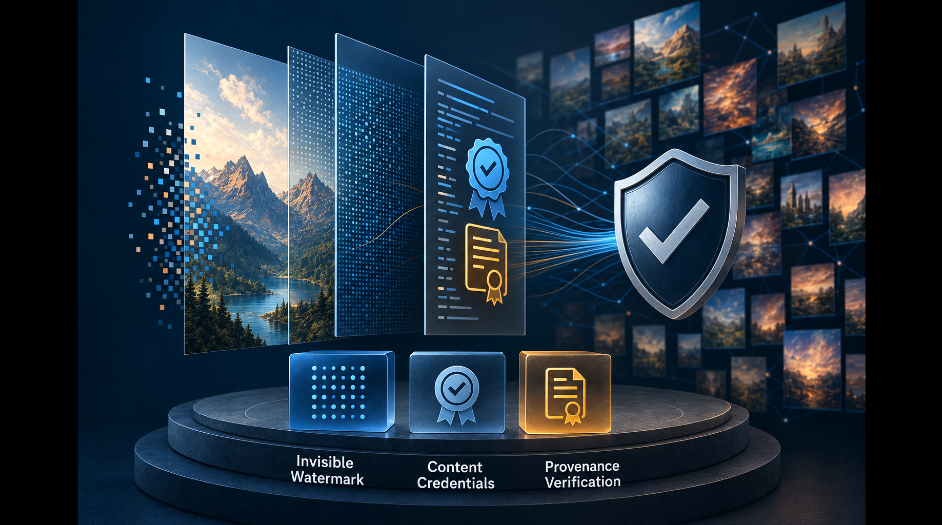
This post-access phase is the blind spot attackers and malicious insiders rely on. Closing it requires a different layer of protection: one that persists in the content itself, such as covert digital watermarking that can make any screenshot or photo forensically traceable back to the individual user who viewed it. That trace-back capability is what turns an anonymous leak into an attributable, stoppable one — and it's the gap Digimarc Leak Detection was built to close.
Every organization has some level of exposure, but certain conditions raise it sharply. Ask yourself:
If you answered yes to even two or three of these, your internal data risk may be higher than your current tooling accounts for.
Warning signs are useful, but a measurable baseline is better. That's why we built an interactive assessment that gauges your organization's exposure to insider data leaks based on the information you share, who can see it, and the controls you have in place.
Take the free insider risk assessment →
Here's how it works:
You can't manage what you haven't measured. Before your next partner onboarding, product launch, or board security review, get the number.
What is an example of insider risk?
A support agent at an outsourced call center photographing customer records on their workstation screen and selling the images — as happened in the 2025 Coinbase/TaskUs breach — is a textbook example. So is an employee accidentally emailing a confidential file to the wrong recipient.
What are the main types of insider threats?
Three: malicious insiders (deliberate theft or sabotage), negligent insiders (accidental exposure), and compromised insiders (legitimate users co-opted or credentialed by external attackers). Increasingly, all three exist within your extended partner ecosystem, not just your own workforce.
How much do insider incidents cost?
Ponemon's 2025 research puts the average annualized cost at $17.4 million per organization, while IBM found breaches involving third parties average over $4.91 million per incident.
How can I assess my organization's insider risk?
Start by mapping what sensitive information you share, who can view it (including third parties), and whether you could attribute a leak to its source. Digimarc's free interactive assessment walks you through this in about five minutes and returns a personalized risk profile.
Ready to see where you stand? Get your insider risk profile now — free, interactive, and complete in five minutes.
Share this Blog