June 22, 2026
Artificial intelligence is revolutionizing enterprise productivity, but it's also supercharging data exfiltration risks in ways most security teams haven't fully grasped. While AI agents, copilots, and generative AI tools promise unprecedented efficiency, they're simultaneously creating new attack surfaces that bypass traditional security controls.
The convergence of democratized AI access, sophisticated deepfakes, and autonomous AI agents has transformed what was once a manageable challenge into an urgent enterprise vulnerability. This guide explores how AI amplifies the analog hole—the moment when sensitive data appears on screen and becomes vulnerable to photography or screenshots that DLP solutions can’t detect—and provides actionable strategies for identifying leakers quickly and preventing future breaches.
Understanding Insider Risk: The Persistent Analog Hole Vulnerability
Insider threats originate from authorized users—employees, contractors, partners—who have legitimate access to organizational systems and data. Unlike external attacks that must breach perimeter defenses, these incidents occur after access is granted, when users can view, capture, and exfiltrate sensitive information displayed on their screens.
The analog hole represents a fundamental vulnerability at the heart of modern data security: the moment encrypted, access-controlled digital data renders on a screen. At this juncture, sophisticated protections like firewalls, encryption, data loss prevention systems, and zero-trust architectures lose their power. Any authorized user can simply photograph a screen or take a screenshot, exfiltrating data through a vector that most security tools cannot monitor or prevent.
Real-world incidents illustrate the devastating impact of analog hole exploitation:
These cases share a common pattern: legitimate access, screen-based data visualization, and low-tech exfiltration methods that evade sophisticated security infrastructure. As enterprises embrace AI, these risks are intensifying dramatically.
4 Ways Artificial Intelligence Amplifies Data Exfiltration Risks
Several converging trends are transforming AI from a productivity tool into a data security liability, making data exfiltration faster, stealthier, and often more damaging than traditional defenses can prevent. Understanding these AI-enabled threat vectors is the foundation of any effective protection strategy.
1. AI-Democratized Access to Sensitive Data Creates New Attack Vectors
Retrieval-Augmented Generation (RAG) systems and generative AI assistants have fundamentally changed data exposure risk by enabling non-technical employees to query vast internal knowledge bases using natural language. These systems synthesize insights from multiple sensitive sources—financial databases, customer records, intellectual property repositories, strategic planning documents—and display the consolidated information on screens in clean, easily captured formats.
The insider risk implications are profound: a single screenshot can now contain synthesized intellectual property, financial models, or customer data that previously required hours, weeks, or even months of manual data aggregation and analysis. AI copilots inadvertently become exfiltration enablers by making comprehensive data access trivially easy for anyone with legitimate system access.
Any employee with AI copilot access can now ask "Show me our top 50 customers by revenue with their contract details" or "Summarize all unannounced product features in development," and receive a comprehensive, screen-ready answer that represents significant exposure if photographed or leaked.
2. Autonomous AI Agents Accelerate Reconnaissance and Data Staging
AI agents operate with broad system access and autonomy designed to maximize productivity—but this same autonomy can create unprecedented insider risk vulnerabilities. These systems can query multiple sensitive data sources simultaneously, synthesize insights through retrieval-augmented generation, automate complex cross-system tasks, and trigger actions across applications without human oversight.
From an insider risk perspective, AI agents function as force multipliers for malicious insiders. Armed with these tools, bad actors can:
This amplification means malicious actors can perform data reconnaissance in minutes rather than weeks, compressing the window for detection and response. The autonomous nature of AI agents also obscures traditional behavioral indicators of insider risk, as unusual data access patterns may appear as legitimate AI-assisted productivity rather than malicious reconnaissance.
3. Unmonitored AI Agents Create Massive Security Blind Spots
AI agents represent a critical insider risk management challenge because traditional security tools can struggle to monitor these "digital employees." Recent research reveals that only 30% of organizations actively map which AI agents have access to critical systems, leaving the majority exposed to unmonitored autonomous actors operating with minimal oversight.
The consequences of this visibility gap can be severe:
The core problem: organizations cannot secure what they cannot see, and AI agents often operate in the shadows of enterprise security architecture.
4. Generative AI Enables Sophisticated Social Engineering
Generative AI has transformed social engineering from a specialized attack technique into a scalable threat vector. AI-generated deepfakes—synthetic voice and video that convincingly impersonate real people—make it dramatically easier for attackers to coerce or manipulate authorized users into voluntarily displaying and sharing sensitive on-screen content.
Recent incidents illustrate the scope of this risk:
This challenge is compounded by real-world human detection rates. Research shows humans perform only slightly above chance at detecting deepfakes (around 50–60% accuracy overall), with performance dropping substantially for high‑quality examples.”
The accessibility of Deepfake-as-a-Service tools has caused incidents to surge dramatically, as it democratized access to advanced deepfake generation capabilities (previously only available to well-funded nation-state actors, for example) needed to execute more sophisticated attacks.
Once deepfakes convince targets to open sensitive files or AI copilot outputs on-screen, attackers instruct victims to take screenshots, framing the request as routine compliance, collaboration, or verification. This transforms well-meaning employees into unwitting vectors for insider risk exploitation—believing they're following proper procedures while actually enabling data exfiltration.
The cumulative impact is clear: AI makes insider threats faster, stealthier, and more damaging than traditional security measures can effectively address.
Why Traditional Security Tools Fall Short in the AI Era
Traditional security strategies were designed for pre-AI threat environments. While endpoint data loss prevention, behavioral analytics, and zero-trust architectures excel at preventing unauthorized access, they fundamentally cannot address what happens after access is legitimately granted—particularly when AI accelerates and obscures the path from access to exfiltration.
Consider the limitations of conventional tools against AI-amplified threats:
The consequence is reactive damage control—expensive investigations, reputational harm, regulatory fines, and lost revenue—rather than prevention, detection, and deterrence. Organizations need post-access protection that extends beyond traditional perimeter and endpoint security to address the analog hole that AI has transformed from a manageable nuisance into a critical enterprise vulnerability.
Five Insider Risk Management Strategies for the AI Era
Protecting against AI-amplified insider risk requires a multi-layered approach combining traditional security controls with new post-access strategies designed specifically for analog hole vulnerabilities.
1. Implement Post-Access Insider Risk Protection with Digital Watermarking
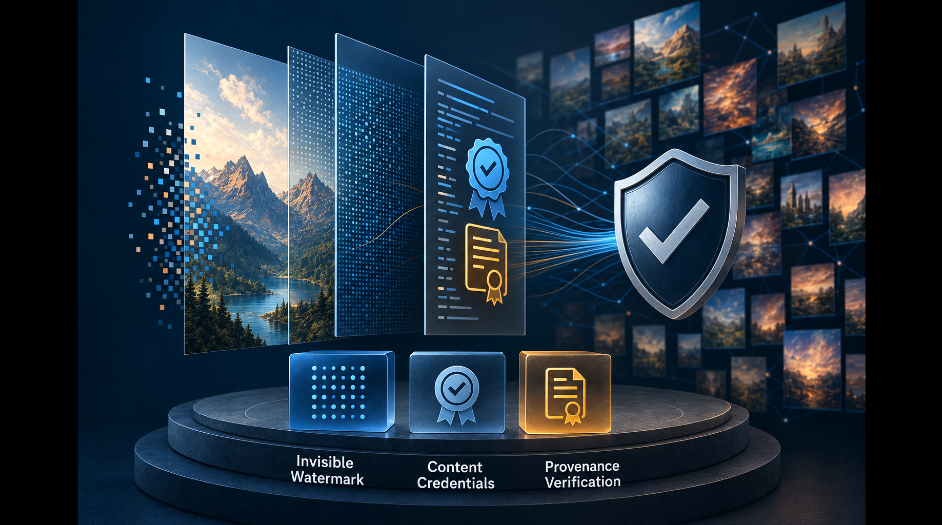
An effective insider risk management strategy for addressing AI-amplified analog hole vulnerabilities is implementing post-access protection through imperceptible digital watermarking. This approach embeds covert, user-specific identifiers directly into on-screen content that persist through screenshots and smartphone photography.
When sensitive information appears in employee portals, AI copilot interfaces, digital workspaces, or content management systems, imperceptible watermarks can encode identifying information such as username, session ID, timestamp, and device identifier. If leaked images surface externally—whether through intentional insider risk actions or AI-enabled social engineering—security teams can trace them back to the specific user or session responsible.
This insider risk management approach is particularly effective against AI-amplified threats because:
Enterprise deployments demonstrate the effectiveness of this insider risk management strategy. Organizations protecting AI copilot interfaces and digital workspaces with watermarking have generated millions of covert security layers annually, enabling rapid identification of leak sources when AI-amplified insider risk incidents occur.
2. Establish AI Agent Governance for Insider Risk Visibility
Effective insider risk management in the AI era requires comprehensive visibility into AI agent activities. Organizations must implement AI governance frameworks that:
AI agent governance directly addresses the insider risk blind spot created by unmonitored "digital employees," ensuring that autonomous AI activities receive the same scrutiny as human user actions in your insider risk management program.
3. Deploy AI-Enhanced Behavioral Analytics for Insider Risk Detection
Modern insider risk management requires behavioral analytics systems specifically designed to detect AI-amplified threats. Next-generation User and Entity Behavior Analytics (UEBA) platforms can:
When integrated with post-access insider risk protection like digital watermarking, AI-enhanced behavioral analytics provides early warning of potential threats before leaks occur, enabling proactive insider risk management rather than reactive incident response.
4. Implement Deepfake Detection and Authentication Protocols
Protecting against AI-enabled social engineering requires layered insider risk management controls that reduce the effectiveness of deepfake attacks:
These insider risk management controls reduce the likelihood that AI-generated social engineering will successfully manipulate authorized users into enabling data exfiltration through the analog hole.
5. Build an AI-Aware Insider Risk Management Culture
Technology alone cannot solve AI-amplified insider risk challenges. Organizations must cultivate security-conscious cultures where employees understand how AI transforms insider risk dynamics. Effective insider risk management awareness programs should:
When employees understand that post-access insider risk protection can trace leaked screenshots back to them, deterrence becomes reality. Combined with education about legal and career consequences, this awareness significantly reduces intentional insider risk actions while building vigilance against AI-enabled social engineering.
Real-World Insider Risk Management: Protecting AI-Enabled Workforces at Scale
Organizations implementing comprehensive insider risk management strategies for AI-amplified threats report significant improvements in security posture and incident response capabilities. Enterprise deployments of post-access protection demonstrate how modern insider risk management can scale globally while addressing analog hole vulnerabilities that traditional tools cannot prevent.
One global enterprise running Digimarc’s leak detection solution deployed imperceptible watermarking across its access-controlled content management system used by tens of thousands of workers worldwide. The insider risk management results were substantial:
This deployment demonstrates that insider risk management solutions designed for modern threats can scale globally while maintaining the seamless experiences that AI-powered productivity requires. Security teams gained visibility into previously invisible analog hole vulnerabilities without creating friction for legitimate AI-assisted business operations.
The Future of Insider Risk Management in an AI-Powered World
As artificial intelligence becomes deeply embedded in enterprise operations, insider risk management must evolve beyond traditional pre-access controls. The analog hole will only expand as more AI agents, copilots, and generative AI systems provide authorized users with unprecedented access to aggregated sensitive information displayed on screens vulnerable to simple photography.
Forward-thinking organizations are investing in insider risk management strategies that:
Post-access insider risk protection through imperceptible digital watermarking represents the next evolution in securing AI-powered enterprises. By embedding covert, traceable identifiers directly into on-screen content, organizations gain the capability to protect information at its most vulnerable moment—when AI systems have aggregated it, human eyes can see it, and cameras can capture it.
The convergence of AI democratization, sophisticated deepfakes, and autonomous AI agents has transformed insider risk from a manageable challenge into an urgent vulnerability requiring immediate action. Organizations that delay implementing AI-aware insider risk management strategies face escalating exposure as AI adoption accelerates across their operations.
Ready to Address AI-Amplified Insider Risk in Your Organization?
Discover how Digimarc's leak detection solutions provide seamless, scalable post-access protection designed specifically for AI-enabled workforces. Our imperceptible digital identifiers protect content where AI systems display it—employee portals, copilot interfaces, digital workspaces—enabling trace-back when insider risk incidents occur. Watch our overview video or request a personalized demo to see comprehensive insider risk management for the AI era in action.
Share this Blog